
AI Voice Call Practice for Dating: Does It Actually Work?
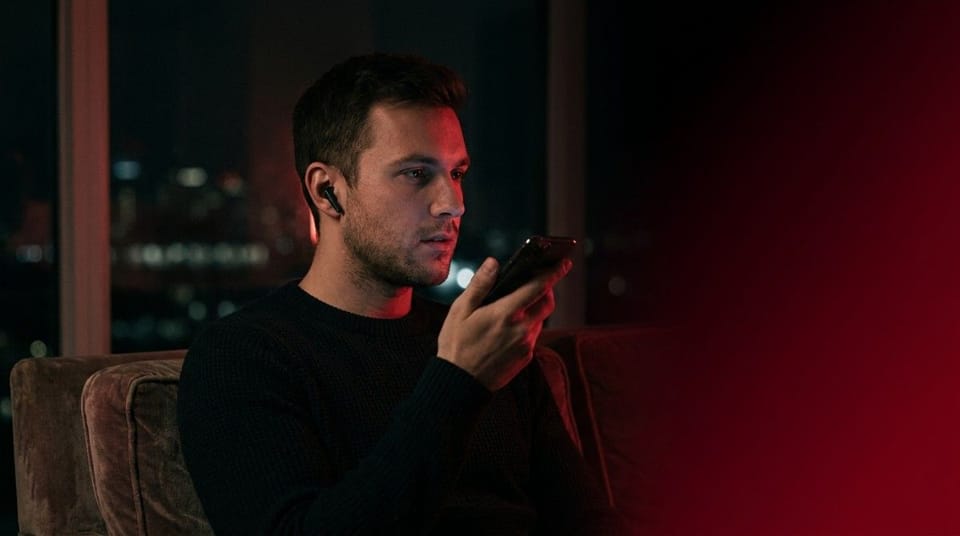
Yes, for the specific problem it's built to solve. AI voice practice has real evidence behind it for building conversational confidence, and voice specifically targets the moment where dating anxiety tends to spike hardest: real time, with no chance to edit your response. What it can't do is simulate chemistry, and no honest source claims otherwise.
AI voice call practice is a simulated, real-time voice conversation with an AI conversational partner, used to rehearse the live back-and-forth of talking to someone new before a real date.
It's a specific format inside the broader idea of why roleplay reduces first-date anxiety in the first place, one built specifically around voice, on demand, without needing a human on the other end.
TL;DR
- It works, for real-time conversational anxiety specifically, not for chemistry or attraction.
- A recent study using AI voice roleplay for skills practice found statistically significant increases in self-reported confidence right after sessions.
- Voice practice targets anxiety more precisely than text tools, because voice removes the "time to compose a reply" buffer, which is exactly where a lot of dating-app confidence actually lives.
- Its biggest practical advantage isn't sophistication, it's repeatability. You can rerun the same awkward moment as many times as you need without a human getting tired of it.
- It's not a clinical treatment for social anxiety disorder, and no credible source in this space claims it is.
- It can't simulate attraction, timing, or the physical reality of an actual date.
- It works best as a warm-up close to the real date, not a long-term substitute for actually going on one.
What Is AI Voice Call Practice?
AI voice call practice is a live, spoken conversation with an AI system built to respond like a person would, in real time, rather than following a fixed script or exchanging text messages.
It's different from a text-based AI dating tool. Those help you write a message. Voice practice helps you handle the moment where you have no time to write anything, because you're talking, and the other person is already responding.
It's also different from roleplaying with a friend, mainly in availability and repeatability. A friend gets tired of running the same scenario twice. An AI voice partner doesn't, which turns out to matter more than it sounds like it should.

Why Does Voice Specifically Matter More Than Text-Based Practice?
Most dating anxiety research and most dating tools focus on text, because most modern dating starts there. But the anxiety that actually shows up on a date isn't a texting problem. It's a real-time problem.
When you're texting, there's a buffer. You can pause, rewrite, delete, and send only the version you're happy with. That buffer disappears the second you're on a call or sitting across a table, and for a lot of people, that's precisely where the nerves live, not in knowing what to say, but in saying it out loud with no edit button.
Voice practice removes that buffer on purpose, in a lower-stakes setting, so the first time you feel that pressure isn't the actual date. This is also why the underlying research keeps landing in adjacent, higher-stakes fields, not dating specifically. A recent study had medical students rehearse difficult patient conversations using AI voice roleplay, and found statistically significant increases in self-reported confidence across every communication skill measured, including handling conversations they found emotionally difficult.
That study wasn't about dating. But the mechanism, real-time voice rehearsal in a low-stakes setting building measurable confidence for a real-time high-stakes conversation, transfers directly.

What Happens If You Rely on AI Voice Practice Instead of Real Dates?
This is the honest caveat, and it matters more than the marketing around most AI companion tools admits. Research on conversational AI and social anxiety is consistently clear on one point: these tools are not a treatment for social anxiety disorder, and broader studies on AI companionship and loneliness show mixed, sometimes complicated outcomes when they're used as a replacement for real interaction rather than a bridge toward it.
Used as a warm-up before a real date, voice practice has a specific, well-supported job: lower the dread enough that you show up present instead of spiraling. Used instead of dating, it just becomes a comfortable way to avoid the thing that was making you anxious in the first place, similar to the avoidance trap covered in how AI tools compare to actually working with a dating coach.
What Each Format Actually Targets
| Format | What It Targets | Repeatable Without Fatigue | Simulates Real-Time Pressure |
|---|---|---|---|
| Text-based AI dating tool | What to say in a message | Yes | No, the composing buffer is still there |
| Roleplay with a friend | Live back-and-forth, general | No, friends tire of repetition | Yes, but limited by one person's range of reactions |
| AI voice call practice | Real-time spoken conversation, specifically | Yes | Yes, closest available format to an actual date |
| No practice | Nothing | N/A | Full pressure, first time, live |
If the pressure point for you is specifically the moment you have to talk, not what to text, DatingX's Practice mode runs exactly that: a live, unscripted voice call with an AI date built to respond in real time.
Statistics & Research Insight
The clearest evidence for this format comes from adjacent fields, not dating specifically, and it's worth naming that limitation upfront rather than overselling it. A recent study using AI voice roleplay for communication-skills practice among medical students found statistically significant increases in self-reported confidence across multiple difficult-conversation domains, immediately after sessions.
Separately, research on virtual and simulated exposure for social anxiety has generally found self-guided formats produce meaningful, measurable improvement, and in several comparisons, results broadly comparable to in-person exposure practice for social anxiety specifically.
At the same time, research specifically on AI companion use and loneliness paints a more mixed picture when these tools are used heavily as a substitute for human contact rather than a rehearsal for it. Both things are true at once: the mechanism works, and the way you use it determines whether it helps or just becomes a comfortable substitute.
Key Insight: The evidence for AI voice practice isn't really about dating. It's about real-time voice rehearsal lowering measurable anxiety before a high-stakes conversation, a finding that shows up consistently across medicine, workplace training, and social-skills research, and applies directly to a first date.

How to Actually Use AI Voice Practice So It Works
- Use it 24 to 48 hours before the real date, not a week out, so the rehearsal stays fresh instead of turning into a script.
- Match the scenario to your actual date type. A coffee date and a dinner date create different pacing, so practice the one you're actually walking into.
- Optimize for staying present through a pause, not for winning the conversation. The goal is composure, not a perfect transcript.
- Rerun the specific moment that trips you up. If it's always the first thirty seconds, practice just that part more than once.
- Treat it as a warm-up, not a substitute. After the session, note one thing that felt hard, then actually go on the date.
- Stop once the dread drops, not once you feel scripted. More reps past that point add polish, not calm.
When NOT to Use This
If your anxiety around dating is part of a broader, diagnosed social anxiety, voice practice can help at the margins, but it's not a diagnosis or treatment tool, and it isn't positioned as one.
Don't use it to keep postponing real dates. The entire value of the format depends on it being a bridge to the real thing, not a replacement for it, which is the same pattern worth watching for in whether leaning on AI tools makes you less authentic more broadly.
And don't expect it to tell you anything about actual compatibility. It rehearses the conversation, not the chemistry, which only shows up in the real room.
Final Takeaway
The honest answer is yes, AI voice call practice works for what it's actually built to do: lowering real-time conversational anxiety before it counts, backed by consistent findings on voice-based rehearsal across medicine, workplace training, and social-skills research. It just isn't, and shouldn't be marketed as, anything more than that.

The honest version of "does this work" is the only one worth publishing, and for DatingX's Practice mode, the answer holds up: a live, real-time voice conversation with an AI date is the closest available rehearsal for the exact moment most people dread, the live back-and-forth, with no buffer to edit your response.
It's built as a bridge to a real date, not a replacement for one. Each session runs as an unscripted call that responds the way an actual person would, so you're not memorizing lines, you're rehearsing composure under mild, repeatable pressure, and the app is available whenever the pre-date dread shows up, not just the night before.
DatingX users describe the shift less as "better lines" and more as knowing what to do with the moment. James, one DatingX user, put it simply: he went from zero dates to six in a month once he stopped overthinking every exchange and started approaching conversations with an actual system behind him.
Why it's built to actually do what it claims:
- 🎙️ Live, unscripted voice conversation, not a script or a chatbot exchange
- 🔁 Repeatable without any social cost, so you can rehearse your specific weak spot as many times as needed
- 📱 A bridge to the real date, not a substitute, available in the DatingX app anytime nerves show up
If the pressure point is the live conversation itself, not what to text beforehand, try a real voice practice call before your next date. Then download DatingX and 10x your dating game.
FAQ
1. Does AI voice practice for dating actually reduce anxiety? Yes, for real-time conversational anxiety specifically. Studies using AI voice roleplay for skills practice have found statistically significant increases in self-reported confidence immediately after sessions, though most of this evidence comes from adjacent fields like medicine, not dating specifically.
2. Is there real research behind AI voice roleplay, or is it just marketing? There's real research, though it's more established in adjacent fields (medical communication training, general social-skills practice) than in dating specifically. The underlying mechanism, real-time voice rehearsal reducing measurable anxiety, is consistent across that research.
3. Why does voice practice work differently than texting an AI for dating advice? Texting gives you time to edit your response before sending it. A live conversation doesn't, and that missing buffer is exactly where a lot of dating anxiety actually lives, so voice practice rehearses the part text tools can't.
4. Can AI voice practice replace real dating experience? No, and it shouldn't be used that way. Research on AI companion use is more mixed when these tools substitute for real interaction rather than lead toward it. Voice practice works best as a warm-up, not a replacement.
5. How is AI voice call practice different from just roleplaying with a friend? The core mechanism is similar, but a friend gets tired of repeating the same scenario and can't offer it on demand. An AI voice partner is repeatable without social cost, which lets you rehearse a specific weak spot more than once.