
We Tested One Line Six Times. Here's What the Data Says.
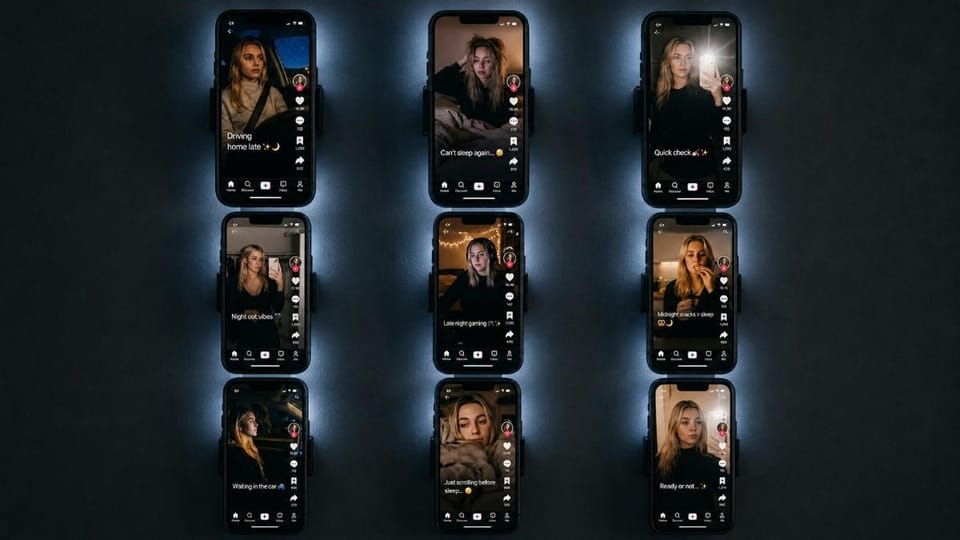
"Just read it and move on." Every dating account with an ounce of confidence has told you this at some point. It sounds right. Nobody actually tells you whether it works, or why, for the specific message you're stuck rereading at 1am. We don't guess whether advice like that holds up. We check.
What we actually look for
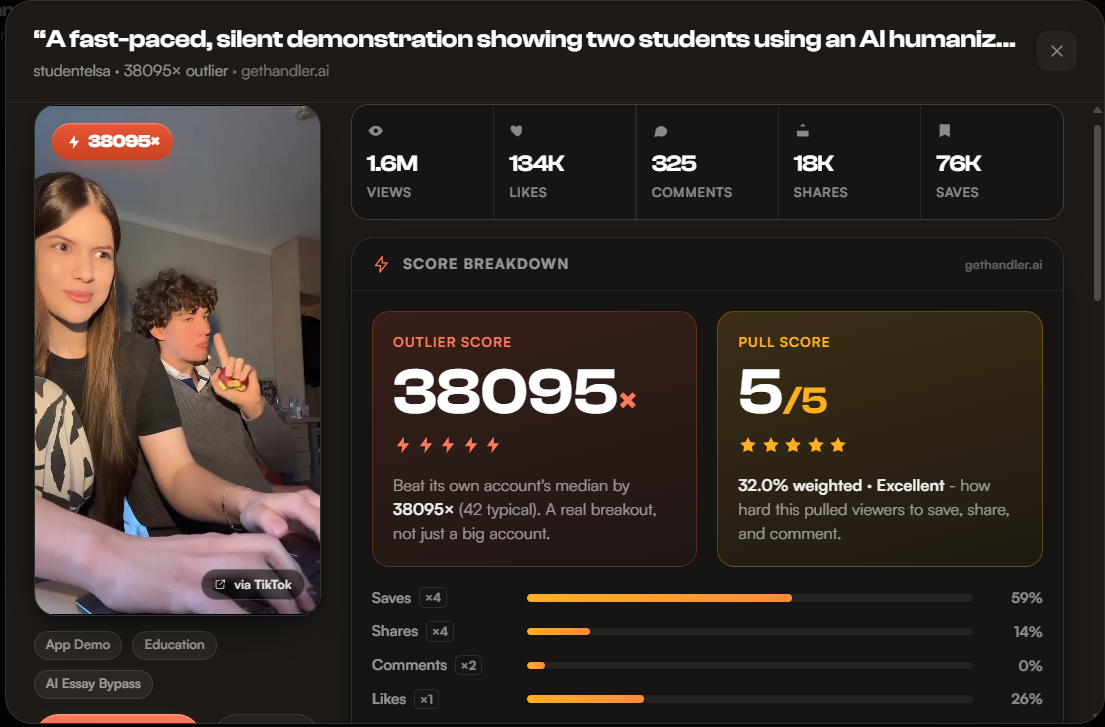
We track outlier content in the dating niche using Handler, specifically its TikSpy library - every video gets scored on an Outlier score (how far it beat that account's own normal performance) and a Pull score (how hard it actually moved people to save, share, or comment, not just scroll past). Views tell you a video got seen. Pull tells you it made someone stop and think.
That's the same logic we run on our own content - including one line we posted so many times we started tracking it like an experiment.
The line we couldn't stop testing
"Sometimes you just gotta read a man's text and go about your day."
We posted this exact line across six separate videos. Same message, different creator or delivery each time. Here's what came back:
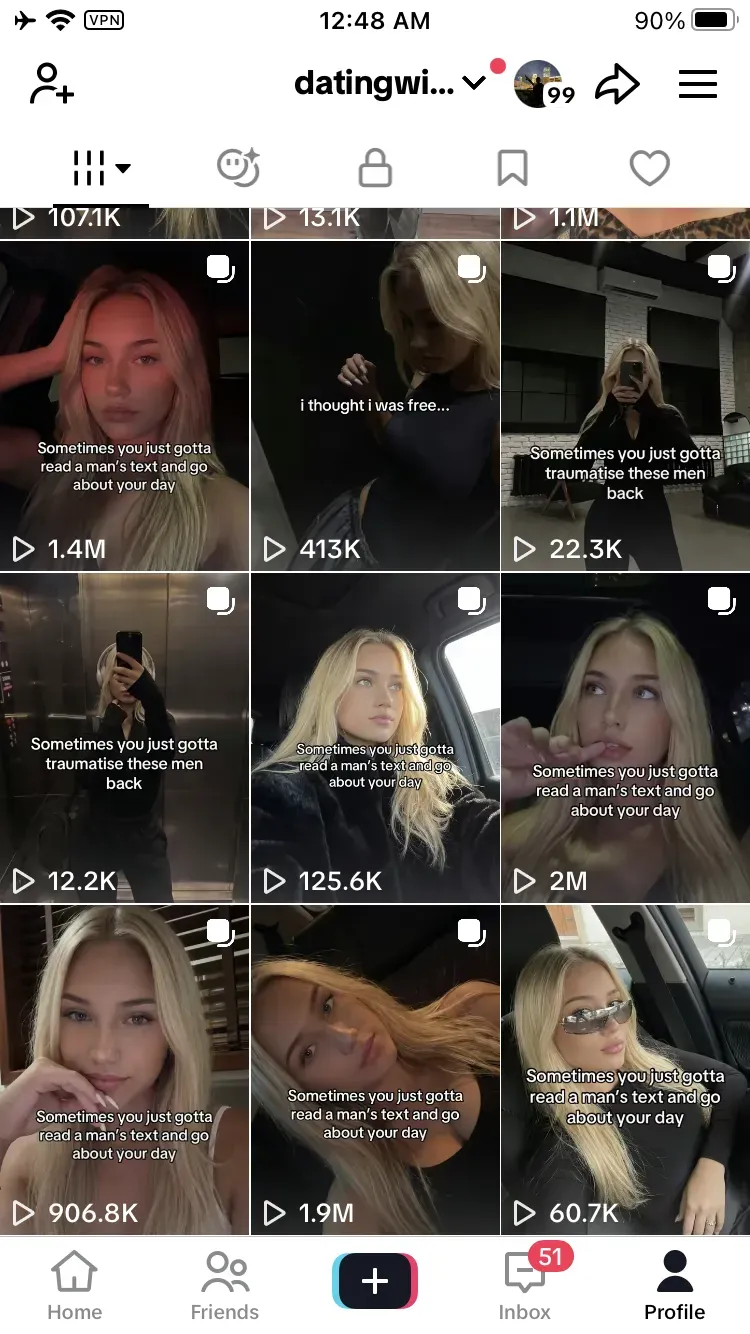
Notice the range: 60.7K on one end, 2M on the other - roughly a 30x swing on the exact same line. The takeaway isn't "this sentence is magic." It's that the words alone don't decide the outcome. Delivery - tone, pacing, who's saying it and how - moved the needle more than the script did. If you've ever sent a "perfect" text that got ignored, this is basically the same phenomenon: the line isn't the whole message.
The companion line that didn't land the same way
We also tested a sharper-edged variant: "Sometimes you just gotta traumatise these men back."
That one came in at 22.3K and 12.2K - consistently lower than every single "read it and move on" attempt, including its worst outing. Two data points isn't a lab result, but it's a real, repeated pattern worth noticing: the calmer, almost bored "I'm just going to go about my day" framing outperformed the more aggressive "get them back" framing every time we ran it. That tracks with something we hear constantly in messages people send us - indifference reads as more confident than retaliation does. Confidence is quiet. Payback is loud, and loud reads as invested.
What we're testing next
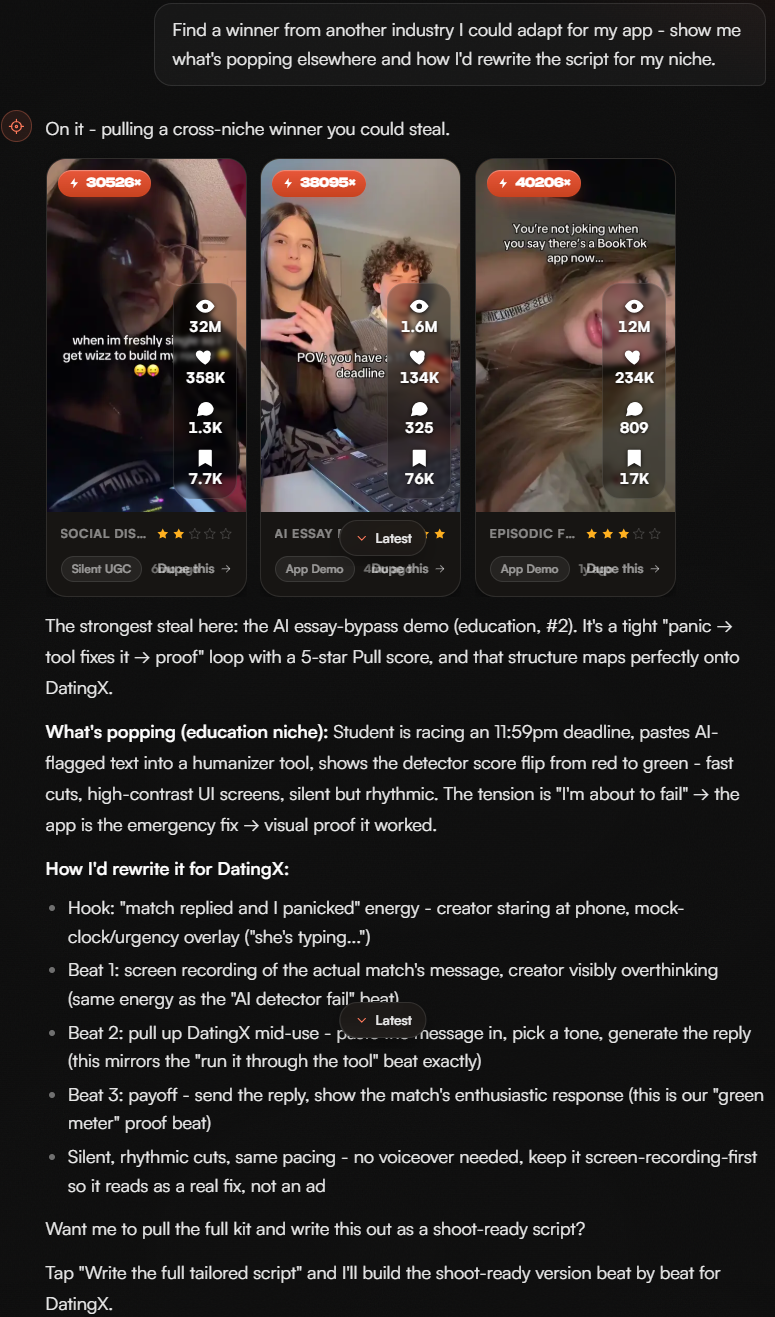
Handler doesn't just track winners in dating content - it also looks at what's converting in completely unrelated niches, on the logic that a strong structure is a strong structure regardless of topic. It recently flagged a video in the education niche: a student racing an 11:59pm deadline, pasting AI-flagged text into a "humanizer" tool, watching a detector score flip from red to green in real time. 38,095x Outlier. 5 out of 5 Pull. The structure is simple: panic, then a tool fixes it, then visible proof it worked.
That maps onto texting anxiety almost exactly. We're planning to shoot our own version: a match replies, the creator visibly panics, DatingX drafts the response, the match responds well. Same beats - bad-text panic instead of bad-essay panic, our tool instead of a humanizer, a good reply instead of a green checkmark. We haven't shot it yet, so we don't have numbers on this one. When we do, we'll come back and tell you honestly whether it held up outside its original niche or not.
What this actually means for your next message
The instinct to overthink a text isn't irrational - it's just aimed at the wrong variable. The line rarely matters as much as you think it does. Confidence in the delivery does. That's the same principle DatingX's Decode and Reply tools are built around: not handing you a magic sentence, but helping you find the read and the tone that actually fits the moment, instead of guessing and hoping.
No fluff. No weak lines. Just what the data actually says.