
Is It Cheating to Be Still on Dating Apps in a Relationship? The 2026 Rulebook
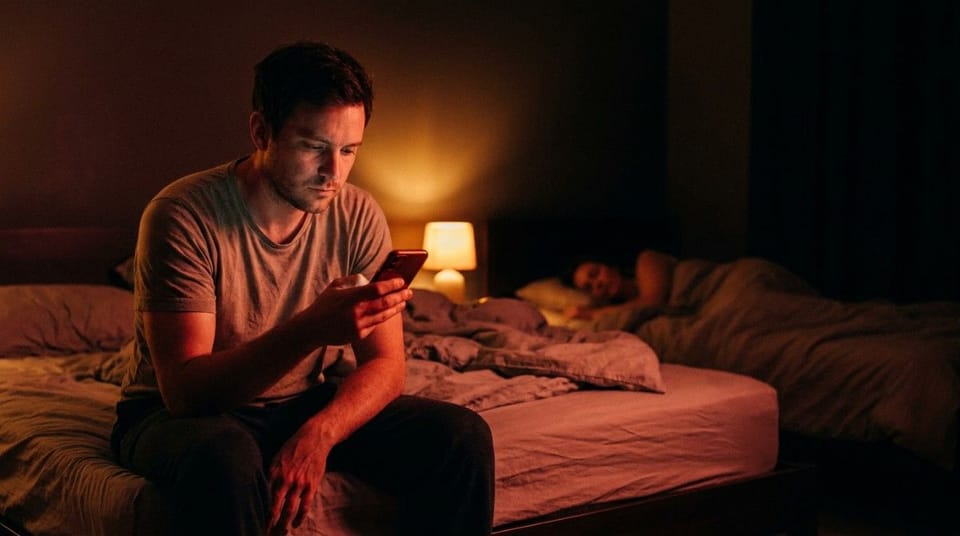
Being on dating apps while in a relationship is cheating if it violates an explicit or reasonably implicit exclusivity agreement, and it isn't if no such agreement exists yet. The act itself isn't the variable. The agreement is. The hardest situations are the ones where the agreement was never actually defined out loud, and one person assumed exclusivity while the other quietly didn't.
TL;DR
- Cheating is defined by the agreement, not the act
- Five relationship stages each carry different default expectations in 2026
- "We never talked about it" is almost always the real problem, not the apps
- Active swiping after the exclusivity talk is cheating by 2026 majority consensus
- A dormant unused profile is a gray zone that depends on intent
- Re-downloading the app after a fight is usually a relationship crisis pattern, not always infidelity
- The fix isn't policing apps, it's clearly defining the relationship
What "Cheating" Actually Means in 2026
Cheating in 2026 is the violation of a relationship's explicit or reasonably implicit exclusivity agreement, regardless of whether physical contact occurred.
That definition matters because it relocates the question. The old definition was act-based: did something physical happen? The 2026 definition is agreement-based: did you do something the relationship had agreed you wouldn't?
Under the agreement-based definition, sexting a stranger is cheating in an exclusive monogamous relationship and isn't cheating in an open one. Being on Tinder is cheating after a defined-the-relationship talk and isn't during the talking stage. The behavior isn't the variable. The contract is.
This is also why the "is being on apps cheating" question gets so heated. People are using different definitions and not realizing it.
If you're trying to figure out whether the other person in your situation is treating the apps as off-limits, the practical signal-reading guide in how to tell if someone is still active on Tinder walks through the behavioral patterns.
The 5 Relationship Stages and What the Apps Mean in Each
The same behavior carries different ethical weight depending on what stage the relationship is in. Here's the 2026 default by stage.
| Stage | Default Apps Expectation | Is Being on Apps Cheating? |
|---|---|---|
| Talking stage (pre-DTR) | Both people still on apps is assumed | No |
| Casually dating, no DTR yet | Mostly still on apps, lower activity | No, but trending toward gray |
| Implicit exclusivity (acting like it but never said) | Mostly inactive, profiles may exist | Gray, depends on actual behavior |
| Explicit exclusivity (the talk happened) | Apps deleted | Yes |
| Long-term relationship | Apps not in the picture | Yes, with significant weight |
The two stages that cause the most confusion are casual dating with no DTR and implicit exclusivity. People assume they're in the same stage as their partner without checking. That assumption is where most "is this cheating" arguments actually start.
We've covered the underlying problem in how long the talking stage should last and the deflection pattern in what "keep it casual" actually means. Most of the time, the issue isn't who's on what app. It's that the relationship was never explicitly named.
The 7 Gray-Zone Scenarios
These are the situations where reasonable people disagree, and where the answer really does depend on details.
1. Profile Exists But Inactive for Months
You're exclusive. They have a Hinge profile that hasn't been opened since before you started dating. Most people in 2026 read this as forgetful, not unfaithful. The fix is asking them to delete it, not treating it as a betrayal.
2. Re-Downloaded After a Fight
Common pattern. They install the app after a serious argument, scroll briefly, don't message anyone, and uninstall the next day. This is usually a relationship crisis signal, not active infidelity. The behavior is a flag worth a conversation, not necessarily evidence of cheating.
3. "Just Looking, Not Swiping"
The classic. They claim they're on the app but not engaging. In 2026, the majority view is that this still counts as a breach if you're in defined exclusivity. The agreement was about the platform, not just the actions on it.
4. Keeping a Profile "For a Friend's Wedding" or Travel
Sometimes legitimately just inactive. Sometimes the friend's wedding never happens. The intent matters here. If the profile is logged in once a quarter and never engaged with, that reads differently than if it's checked on travel weekends.
5. "Researching" or "Comparing Options"
The insurance-policy mindset. The person isn't acting on it, but they're keeping the option open in case the relationship fails. 2026 consensus reads this as a trust issue more than an act of cheating, but it's a real problem regardless of the label.
6. Tracking an Ex's Activity
Logging in to see whether an ex has moved on. No swiping, no messaging, just data collection. This is one of the few gray zones where most people in 2026 agree it isn't cheating, but it does flag unresolved attachment that should be named.
7. The "We're Not Exclusive" Loophole, Used Past Month 6
Two people have been dating six months. One person assumes exclusivity. The other technically said "we never made it official" and keeps swiping quietly. Legally not cheating by strict definition. Practically, almost everyone in 2026 calls this dishonest, even when not technically cheating.
This pattern often shows up alongside other deflection behaviors. We break down how to spot the broader pattern in breadcrumbing vs. casual dating and love bombing vs. genuine interest.
🔑 Key Insight: The single best predictor of whether being on apps will feel like cheating to a partner is whether the person on the apps is open about it. Hiding the behavior is usually a sharper signal than the behavior itself. The hiding is the data.
The 2026 Rulebook: 5 Principles

1. The agreement defines the act.
Whatever you and your partner have explicitly agreed to is the rule. If you've never agreed to anything explicitly, the rule is the reasonable implicit one based on your relationship stage. The act of being on an app isn't inherently anything. It's only "cheating" relative to a defined or implied agreement.
2. Hiding the behavior is its own data point.
If someone needs to hide being on the app, on some level they already know it would feel like a violation if discovered. The hiding is usually more telling than the activity itself. Open use isn't a problem in non-exclusive relationships. Hidden use is a problem in almost any relationship.
3. Re-installing after a fight is a relationship crisis pattern, not always infidelity.
Don't treat the app-install as the offense in isolation. Treat it as a sign the relationship needs attention. Some people install in a moment of anger or doubt, never engage, and uninstall when they calm down. The pattern still needs to be named, but it's not always proof of intent to cheat.
4. The conversation can be retroactive.
If you've been together for months and never formally had the exclusivity talk, you can still have it now. "Hey, I realized we never explicitly defined this. Are we exclusive? Are the apps off the table?" That's not awkward. That's clarifying. Most relationship damage from this question comes from never asking it, not from asking it late.
5. Your gut on what counts is data.
If something feels like cheating to you, that feeling matters even if your partner argues semantics. Modern monogamy is built on mutual agreement about what counts as a breach. Your standards are valid even if they're stricter than your partner's. The compatibility question is whether your standards can be reconciled, not whether yours are objectively correct.
When It's Definitely Cheating
A few cases where 2026 consensus is unanimous:
- Active swiping and messaging in any defined exclusive relationship
- Setting up meetings or dates with new matches while in a committed relationship
- Maintaining a profile your partner has explicitly asked you to delete
- Lying about the existence of a profile when asked directly
When It's Clearly Not
- Using dating apps during the talking stage before any exclusivity conversation has happened
- A dormant profile no one has logged into in months that gets deleted as soon as it's surfaced
- An ethical non-monogamous relationship where app use is explicitly part of the agreement
- Using AI dating copilots in your own conversations (see are AI dating chatbots cheating for the deeper take)
The companion piece on whether to investigate further if you suspect something is in should you check if your partner is on dating apps.
Statistics & Research Insight
A 2024 YouGov survey of US adults in committed relationships found that 76% considered active swiping during exclusive monogamy to be cheating, while only 31% considered a dormant unused profile to be cheating. A separate 2023 study published in Journal of Sex Research found that the strongest predictor of whether a behavior was experienced as cheating wasn't the act itself, but the level of secrecy surrounding it. Hidden behavior was rated as a breach across categories. Disclosed behavior was rated as less of a breach even when identical.
Translation: in 2026, openness is doing most of the ethical work. The apps are almost a secondary variable.
Final Takeaway
Is being on dating apps in a relationship cheating? It depends on the agreement, the stage, and the level of openness around it. The strongest predictor of trouble isn't the platform. It's the absence of an explicit conversation about exclusivity. Modern relationships don't break because someone violated a clear rule. They break because the rule was never clearly stated and both people assumed they were on the same page. The 2026 rulebook is shorter than people think: name the relationship, disclose what you're doing, respect the agreement once it's made. The apps almost never matter on their own. The honesty around them always does.
Have the Talk. Read the Room. Stop Guessing.
Most "is this cheating" anxiety comes from one place: a conversation that should have happened weeks ago and didn't. The fix isn't surveillance. It's having the harder conversation cleanly, in language your partner can hear without going defensive. That's a skill, not a personality trait, and most people are bad at it because they never get to practice.
The DatingX Decoder reads the conversation you're already having and tells you where the engagement actually is, what's being avoided, and what your real next move should be. If your partner is dodging the exclusivity talk, the Decoder will see it in the chat history before you do.
Three things DatingX gives you for the conversations that actually decide the relationship:
- A clear read on whether they're engaged or evading. The Decoder scores interest, momentum, and avoidance patterns across an entire conversation.
- A rehearsal space for the hard talk. The Virtual Date practice simulator lets you run the exclusivity conversation in a low-stakes voice call before having it for real.
- Replies that don't kill the moment. Use the Convo Replier when the texting gets weighty and you don't want to fumble the moment that matters most.
Download DatingX and 10x your dating game.
FAQ
Is it cheating to be on dating apps if we never had the exclusivity talk?
Not technically, but it's a gray zone. The 2026 default is that during the talking stage and early casual dating, both people are assumed to still be on apps. The problem usually isn't the apps, it's that one person assumed exclusivity without confirming. The fix is having the explicit conversation rather than guessing.
Is having a dormant Tinder profile cheating?
Most people in 2026 don't consider an unused, forgotten profile to be cheating. A 2024 YouGov survey found 76% called active swiping in monogamy cheating, but only 31% said the same about a dormant profile. Intent and behavior matter more than the profile's existence. If your partner asks you to delete it and you don't, the issue becomes the refusal, not the profile.
Is just looking on dating apps cheating without messaging anyone?
In a defined exclusive relationship, yes, most 2026 daters consider this a breach. The exclusivity agreement is usually understood to cover the platform itself, not just messaging. "Just looking" is also rarely just looking. The behavior usually escalates if uninterrupted.
Is re-downloading a dating app after a fight cheating?
Usually not by itself, but it's a serious relationship signal. It often reflects emotional dysregulation, not active intent to cheat. That said, the pattern needs to be named in conversation. Repeated re-downloads after every fight is its own pattern that points to unresolved trust or commitment issues.
What if my partner says it's not cheating but it feels like cheating to me?
Your standards are valid even if they're stricter than your partner's. Modern relationships work on mutual agreement about what counts as a breach. If you and your partner can't agree on what's off-limits, that's a compatibility question, not just a definitions question. The conversation worth having is what each of you actually needs, not who is technically right.