
How to Fix Anxious Attachment: A Real Plan, Not Just "Stop Being Needy"

You fix anxious attachment by learning to soothe yourself when the fear of abandonment spikes, instead of immediately reaching for a partner to do it for you. The goal is not to care less. It is to stop outsourcing your sense of safety to someone else's reply speed.
If you are sick of advice that boils down to "just relax" or "stop being so needy," good. That advice is useless, because the moment distance appears, your nervous system overrides it before willpower gets a vote.
Fixing anxious attachment means building an internal sense of security so a partner's distance no longer feels like an emergency, which turns the panic-and-pursue reflex into a calmer, steadier response. 🧠
This is the plan nobody writes: what to actually do when the spiral hits, why "find someone secure" will not save you, and the one lever research keeps pointing to.
TL;DR
- You cannot relax your way secure. You retrain the panic-and-pursue reflex through repetition.
- "Stop being needy" fails because hyperactivation fires faster than your good intentions.
- The core lever is self-compassion: becoming your own secure base instead of borrowing one.
- The real plan is a handful of moves: self-soothe first, delay the protest, name the need, decouple your worth from their texts.
- The fastest path is reps in low-stakes settings, not waiting for the perfect partner to heal you.
- Research shows self-compassion measurably moves people toward secure attachment. It is trainable.
What It Actually Means to Fix Anxious Attachment
Kill the fantasy first. Fixing anxious attachment does not mean becoming cold, lowering your standards for closeness, or pretending you do not care. The goal is not to swing to the avoidant end. The goal is secure: able to want closeness without panicking when it wobbles.
Anxious attachment is one of the insecure attachment styles, and at its core it is a strategy your nervous system built to keep love from disappearing. For the full picture of how it shows up, here is anxious attachment in dating.
So "healing anxious attachment" is really just teaching your system a new default: that distance is usually temporary, and that you can hold yourself steady while you wait to find out. Not no needs. Different reflexes.
Key Insight: Secure is not the absence of the fear. It is the ability to feel the fear and not let it run the show.

First, Are You Actually Anxiously Attached?
Before you build a whole plan, make sure this is your pattern. The quick read: you feel most unsettled not when things are bad, but when they are uncertain. A slow reply becomes a verdict. Distance feels like danger. You pursue when you sense someone slipping, even knowing it can push them away.
If that lands, you are likely working with anxious attachment, not just a rough patch. For the full identification list, see the signs of anxious attachment.
If it only happens with one specific, genuinely inconsistent person, that may be accurate radar rather than a style. Pattern across relationships is the tell.
Why "Just Stop Being Needy" Never Works
Because the advice targets the wrong layer.
The pursuit is not a decision. It is hyperactivation, a fast, automatic ramping-up of your attachment system the instant it senses a threat to the bond. By the time your rational brain says "play it cool," your system has already flooded you with alarm and your thumb is hovering over a third text.
You cannot out-willpower a nervous-system reflex with a slogan, and "stop being needy" adds shame on top of fear, which only cranks the alarm louder. You retrain the reflex by changing what you do in the seconds after it fires, not by hating yourself for having it.
Key Insight: Anxious attachment is rewired at the level of behavior and self-talk, not willpower. The fix is a different action, and a kinder inner voice, in the exact moment you want to chase.

How to Fix Anxious Attachment: The Actual Plan
Here is the part nobody writes. Six concrete moves, small enough to actually do.
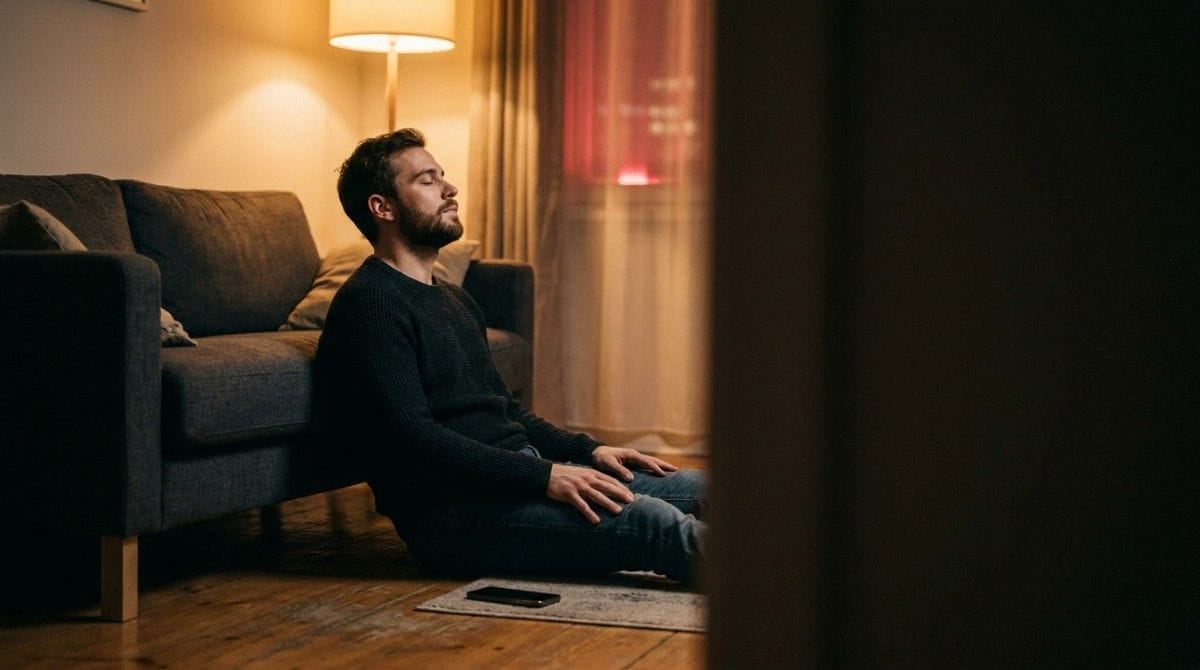
- Self-soothe before you reach out. When the panic hits, calm your body first: slow breaths, a hand on your chest, one kind sentence to yourself. You are proving you can be the source of your own safety, not just the receiver of it.
- Delay the protest behavior. When you feel the urge to double-text, check if they are online, or test them, wait it out. Ten minutes, then an hour. The urge passes, and every time it does, the reflex weakens.
- Name the need instead of acting it out. Replace the test with the truth: "I am feeling a little anxious and some reassurance would help." That is a clean request. Withdrawing to provoke a reaction is a protest, and it backfires.
- Decouple your worth from their response. Build a life full enough that a slow text cannot set the temperature of your whole day. Friends, work, things that are yours. Security partly means having somewhere else to stand.
- Stop chasing the spark of unavailable people. That electric pull toward someone distant is often your wound recognizing a familiar dynamic, not compatibility. Notice that the people who keep you guessing are not the prize. If you keep landing on avoidant partners, avoidants come back when you stop chasing anyway, so chasing was never the lever.
- Reframe distance as neutral. Practice reading "I need space" as temporary and normal, not as the start of being left. The story you tell about the distance is what triggers the spiral, so change the story.
None of these are dramatic. That is the point. Security is built in small reps, not grand declarations.
The Fastest Way to Rewire It: Reps, Not Insight
Here is the uncomfortable truth. The thing you most need to practice, staying calm when closeness feels uncertain, is the thing you get the fewest clean reps at, because you usually practice it live, mid-panic, with a real person whose reaction raises the stakes.
That is the gap. You need low-stakes reps at the exact moment you normally spiral, without a real connection on the line while you learn to hold steady.
This is what DatingX Practice is built for. It is a simulated voice conversation where you can rehearse the moments that trigger your pursuit, the slow reply, the "I need space," the wobble, with zero stakes and nobody to lose. You run the rep, you stay steady, your system updates.
If part of you suspects rehearsing connection is somehow fake, that is worth reading on its own: here is the honest take on whether using a tool like this makes you less authentic. Short version: practicing staying calm is not less authentic, it is how you show up as your steadiest self when it counts.
The spiral lives in one panicked moment. Rehearse the calm version before you are in it. Practice my date.
What Happens If You Wait for the Right Partner to Fix You?
You stay stuck, and you hand a stranger the keys to your nervous system.
The fantasy is that a secure, endlessly reassuring partner will finally calm the fear. A steady partner genuinely helps, but if your security depends entirely on their behavior, every normal moment of distance still detonates, and you will exhaust even the most patient person. Worse, anxious systems often find calm love boring and get pulled back toward the unavailable people who keep the alarm ringing. If that pull keeps landing you with an avoidant, it is worth knowing whether an anxious avoidant relationship can actually work before you bank your healing on it.
Security that depends on someone else is not security, it is a hostage situation with better lighting. The internal version is the only kind that holds.
What Healing Actually Looks Like
It is not linear, and it is not the fear vanishing.
Early on, you will still feel the spike, but you will pause before the protest more often. Over weeks, the gap between trigger and reaction widens. Over months, distance starts to feel survivable instead of fatal, and calm partners start to feel safe instead of dull. You do not become a person who never gets anxious. You become a person whose anxiety no longer drives.
The fear shows up less because you stop feeding it, not because you waited it out.
When This Plan Is NOT the Right Move
A few honest exceptions, because forcing this wrong backfires.
- The worry is actually warranted. If a partner is genuinely being shady or inconsistent, do not "self-soothe" your way past accurate information. That is not anxiety, that is data.
- You are white-knuckling fake calm to keep someone. Suppressing real needs to seem low-maintenance is not security, it is people-pleasing in disguise. The goal is regulation, not self-erasure.
- This is clinical anxiety, not attachment. If the anxiety is pervasive and not relationship-specific, it deserves real support of its own, separate from attachment work.
The plan is for the times you spiral over normal, temporary distance. Not for the times your gut is right.
Statistics and Research Insight
The hopeful part has real evidence, and it points somewhere specific: self-compassion.
In a controlled trial of Attachment-Based Compassion Therapy, participants showed a significant move toward secure attachment along with reductions in both anxiety and avoidance, and that shift toward security was mediated by gains in self-compassion. In plain terms, learning to treat yourself kindly is one of the most direct routes from anxious to secure.
There is a physiological layer too. Studies find that self-compassion exercises measurably down-regulate the body's threat response, lowering heart rate and raising heart-rate variability, a marker of good emotional regulation. The calming of the body tends to come first, and the feeling of safety and connection follows. That is the science behind "self-soothe before you reach out": you are not just thinking calmer, you are physically turning down the alarm.

A Quick Framework: The 4 Levers of Earning Secure Attachment
The whole plan reduces to four levers you can pull on purpose.
- Self-compassion: become your own secure base instead of borrowing one.
- Self-regulation: soothe your body before you act on the fear.
- Honest communication: name the need cleanly instead of acting it out.
- Secure choices: invest in people, and a life, that can actually meet you.
Pull these consistently and the reflex loosens. Skip the first one, self-compassion, and the rest tends to collapse under self-criticism.
Final Takeaway
You do not fix anxious attachment by caring less or by finding someone who never triggers you. You fix it by becoming the person who can steady themselves when the fear spikes, then doing it again tomorrow.
It is learnable, the research points straight at self-compassion, and the goal is not to become someone else. It is to become someone whose love is no longer run by the fear of losing it. The panic was a strategy you learned. Calm is one you can learn too.
The Spiral Lives in One Moment. Practice Calm Before You're In It. 🎧
Reading this changes nothing on its own. You already proved that the last time you understood the spiral perfectly and double-texted anyway.
What changes the reflex is practicing the exact moment you panic, before it counts for real. That is the whole idea behind DatingX Practice: a simulated voice conversation where you rehearse the hard beats with zero stakes.
- Rehearse the moment you usually chase. The slow reply, the "I need space," the silence that sets you off. Practice staying steady until it feels possible instead of impossible.
- Zero stakes, real reps. No real connection on the line while you learn. Just you, building the muscle anxiety let run wild.
- Carry it into the real conversation. The rep updates your system, so when distance hits for real, you respond instead of spiral.
Not sure whether you lean anxious, avoidant, or secure? Start with the quick read inside the DatingX onboarding and get a plan aimed at your actual pattern.
The first two minutes are free. Run one rep tonight. Practice my date and 10x your dating game.
FAQ
Can you fix anxious attachment? Yes. Attachment style is a learned pattern, not a fixed trait, and people move from anxious to secure through self-compassion, self-regulation, and corrective relationship experiences. The core skill is learning to soothe yourself when the fear of abandonment spikes instead of immediately seeking reassurance from a partner.
How do you fix anxious attachment? You retrain the panic-and-pursue reflex with small, repeated moves: self-soothe before you reach out, delay the protest behavior, name your need cleanly instead of acting it out, and build a life and self-worth that do not hinge on a partner's reply. Self-compassion is the lever research points to most.
How long does it take to heal anxious attachment? There is no fixed timeline and it is not linear. Small reps produce noticeable shifts in weeks, while a stable secure default usually takes months of consistent practice. Speed depends on how often you actually pause the spiral and self-soothe, not on how well you understand it.
Will a secure partner fix my anxious attachment? A steady, secure partner genuinely helps, but they cannot do the work for you. If your sense of safety depends entirely on their behavior, normal moments of distance still trigger the spiral. Lasting security has to be built internally, with a supportive partner as help, not as the cure.
Is anxious attachment the same as being needy? No. "Needy" is a judgment, anxious attachment is a nervous-system pattern driven by a learned fear of abandonment. The behaviors are attempts to feel safe, not attempts to control anyone, and shaming them as neediness usually makes the anxiety worse, not better.