
Can an Anxious Avoidant Relationship Work? What It Actually Takes

An anxious avoidant relationship can work, but only when both people own their pattern and stop trying to fix it by doing more of what already fails: the anxious partner chasing harder, the avoidant partner pulling back further. Patience alone does not fix it. Mutual work does.
An anxious avoidant relationship can work, but only if both partners take responsibility for regulating themselves instead of trying to change each other, because the cycle is fueled by each person's instinctive reaction to the other. 💞
If you are the anxious one, you already know the loop: they pull away, you panic and pursue, they pull away more. Here is why the two of you attract, exactly how the cycle traps you, what it genuinely takes to break it, and when it is healthier to walk.
TL;DR
- It can work, but not through one person out-patienting the other.
- Anxious and avoidant attract because each confirms what the other already expects about love.
- The trap: anxious pursues for closeness, avoidant withdraws from pressure, and each move makes the other worse.
- It shifts toward secure only when both regulate themselves instead of trying to fix the other.
- The anxious partner's job is to self-soothe instead of chase. The avoidant's is to stay present instead of flee.
- If only one person does the work, the cycle usually wins. That is also your signal to reassess.
What Is an Anxious-Avoidant Relationship?
It is a pairing between someone with an anxious attachment style and someone with an avoidant one, two opposite ways of handling the same fear: that love is not safe.
Anxious attachment means closeness feels never quite secure, so the person seeks reassurance, reads distance as rejection, and pursues connection to calm the fear of being left. Avoidant attachment means closeness feels like a threat to independence, so the person creates distance to feel safe. The cluster covers the avoidant side in depth in avoidant attachment in dating.
Put those two together and you get a relationship where one person's comfort is the other's trigger. That is the whole story, and the rest of this article is just the mechanics.
Anxious and avoidant are not opposite in what they want. Both want safe closeness. They are opposite in the strategy they use to chase it, and those strategies collide.
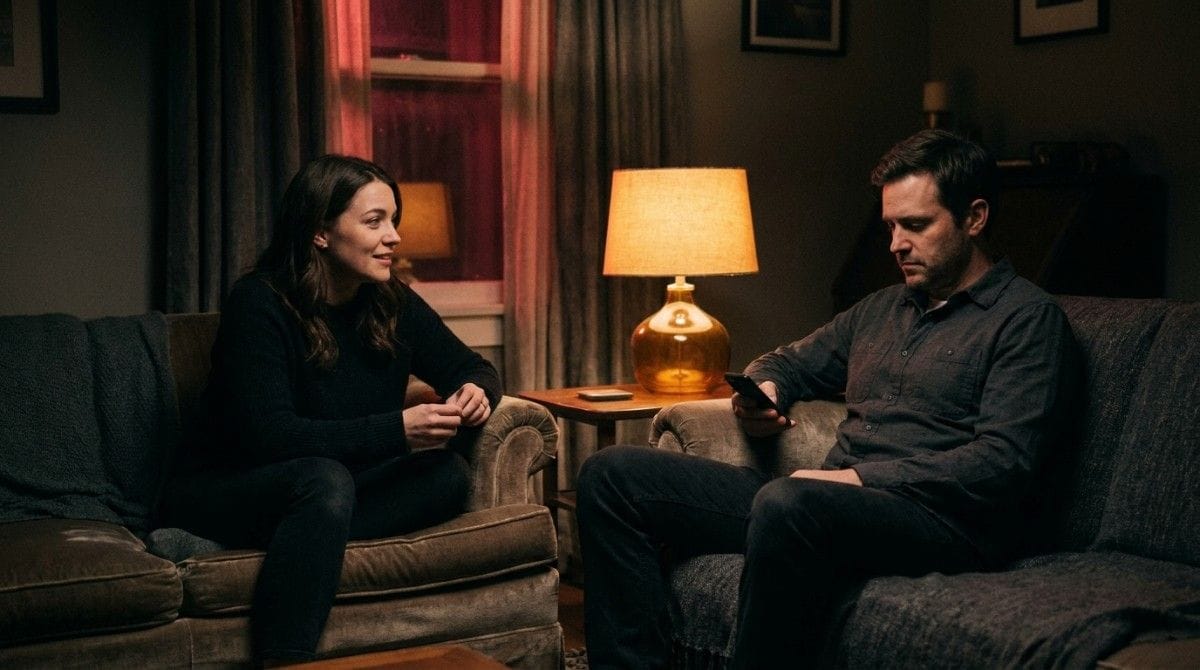
Why Do Anxious and Avoidant Partners Attract Each Other?
Because your nervous system is drawn to what feels familiar, not what feels healthy.
Attachment researchers describe a complementary pattern: people are often pulled toward partners who confirm what they already expect about relationships. An anxious person, expecting others to be distant and hard to hold onto, finds the avoidant's elusiveness oddly magnetic. An avoidant, expecting closeness to come with pressure, finds the anxious person's intensity familiar too.
Their systems interlock. The anxious pursuit and the avoidant retreat fit together like a lock and a key that hurts. Early on it even feels like chemistry, because both nervous systems are getting exactly the charged, push-pull dynamic they were trained to expect.
That electric "spark" with an avoidant is often not compatibility. It is your attachment system recognizing a familiar wound and calling it home.
What Is the Anxious-Avoidant Cycle?
Also called the anxious-avoidant trap, it is a self-feeding loop, and once you see it you cannot unsee it.
- Closeness rises. Things get good, intimacy deepens.
- The avoidant deactivates. Closeness trips their alarm, so they pull back to feel safe.
- The anxious panics. The distance reads as abandonment, so they pursue, text more, seek reassurance.
- The avoidant withdraws harder. The pursuit is the exact pressure that triggers them, so they retreat further.
- Repeat, tighter each time.
Each person is using their instinctive coping strategy, and each strategy is the other's worst trigger. Nobody is the villain. The dynamic is. For the avoidant's side specifically, including what actually helps in the moment, see how to deal with an avoidant partner.

Can It Work, and What Does It Take?
Yes, it can. Honestly. But not the way most people try to make it work.
It does not change because the anxious partner becomes more patient or the avoidant partner gets loved hard enough. It changes when both people learn to tolerate the discomfort without defaulting to pursuit or withdrawal, and take responsibility for calming themselves instead of managing each other.
Attachment research is genuinely hopeful here. Studies on partner buffering show that insecure partners react far less from their fear when the relationship feels safe and their specific worries are met in a tailored way. Anxiety eases with steady reassurance and a clear, secure bond. Avoidance eases when autonomy is respected inside a warm relationship rather than demanded away. People can move toward security through exactly these kinds of corrective experiences. The avoidant's half of that work is laid out in how to stop being avoidant.
The relationship becomes secure when two insecure people stop trying to regulate each other and start regulating themselves. That is the entire fix, and it is mutual or it is nothing.
How Do You Break the Anxious-Avoidant Cycle?
You interrupt your own move in the loop, because that is the only move you control.
If you are the anxious one:
- When they pull back, do not pursue. Feel the panic, name it, and self-soothe before you reach for the phone.
- Read the distance accurately. Their pulling away is usually deactivation, not abandonment. It also often reverses once the pressure drops, which is the whole point of how often avoidants come back when you stop chasing.
- Build a life and a sense of safety that does not depend on their availability minute to minute.
If you are the avoidant one:
- When you feel the urge to flee, tell them instead of vanishing. "I need a little space, I am not leaving" changes everything.
- Stay in the moment ten minutes longer than is comfortable. Reps build tolerance.
It also helps to know which kind of avoidant you are dealing with, since a dismissive and a fearful avoidant respond differently, as broken down in the two types of avoidant attachment.
What Happens If Only One Person Does the Work?
The cycle usually wins.
One regulated person can soften the dynamic for a while, and a steady, secure presence genuinely helps an insecure partner. But buffering only works if the other person is also willing to meet it. If you self-soothe while they keep fleeing and refuse to look at it, you are not healing the cycle, you are just absorbing it quietly.
This is the honest part most articles skip. It takes two. One person cannot love a relationship secure alone.
When an Anxious-Avoidant Relationship Won't Work
Some of these pairings make it. Many do not, and pretending otherwise keeps people stuck. Be honest with yourself if:
- They refuse to acknowledge the pattern. No awareness, no change. You cannot do their half.
- The cycle never improves, only repeats. Round after round with no shift means it is a loop, not a relationship that is growing.
- You are losing yourself to keep it. If staying requires shrinking your needs to nothing, the cost is too high, whatever their attachment style.
- There is contempt, not just distance. Attachment work assumes basic goodwill. If that is gone, this is a different problem.
Choosing to leave a cycle that will not change is not a failure to be patient enough. It is self-respect.
Statistics and Research Insight
The science backs both the difficulty and the hope.
On attraction: research consistently finds anxious and avoidant partners pair up more often than chance would predict. The leading explanation is the complementary hypothesis, the idea that we are drawn to partners who confirm our existing expectations about relationships. The anxious person expects distance, the avoidant expects pressure, and each one delivers exactly that, which feels familiar enough to register as chemistry.
On whether it can change: the Attachment Security Enhancement Model and partner-buffering studies show that insecure partners behave far more securely when their specific fears are met in tailored ways, reassurance and a strong bond for anxiety, respected autonomy for avoidance. Secure-acting behavior from one partner can measurably raise the other's relationship satisfaction. The consistent catch across all of it: lasting change requires both people to work, not one to compensate forever.
A Quick Framework: Can Yours Work?
Run this honestly before you decide.
- Awareness: Do both of you actually see the cycle? Two yeses is the foundation. One no is a red flag.
- Ownership: Is each person willing to fix their own half, not just point at the other's?
- Movement: Over months, is the loop getting looser, even slowly? Direction matters more than speed.
- Cost: Are you growing, or disappearing? If staying erases you, the answer is already in.
Two or more pointing the wrong way means the work is not mutual, and no amount of your effort alone will close that gap.
Final Takeaway
Can an anxious avoidant relationship work? Yes, when two people stop fighting the cycle by doing more of what fuels it and start regulating themselves instead of each other. The pull-and-chase is not love, it is two nervous systems triggering each other on repeat.
Break your own link in the chain, ask the same of them, and watch whether the loop loosens. If it does, you can build something secure out of two insecure starts. If only you ever do the work, that answer is honest too, and it frees you.
The Cycle Lives in the Panic Moment. Practice Calm Before You're In It. 🎧
The whole loop turns on a few seconds: the moment they go distant and your system screams "pursue." Win that moment and the cycle loses its fuel. The problem is you cannot practice staying calm while you are mid-panic with the real person.
That is exactly what DatingX is built to give you.
- Rehearse the regulated version. With DatingX Practice, you can run the exact conversations that usually trigger your pursuit, on a simulated call, until staying steady feels possible instead of impossible.
- Read the distance, not the worst case. When they pull back, drop the thread into the Chat Decoder and get an objective read, so you respond to what is actually happening instead of your fear of being left.
- Break your link in the chain. You only control your move in the loop. These are the reps that make a calmer move possible when it counts.
You cannot fix the cycle by pursuing harder. You fix it by being the person who does not flinch when they pull away.
Practice the calm before the panic. Try DatingX Practice and 10x your dating game.
FAQ
Do anxious-avoidant relationships ever work? Yes, but only when both partners recognize the cycle and work on their own half of it. They do not improve through one person being more patient or loving. They shift toward secure when each person learns to self-regulate instead of trying to change the other, ideally with steady reassurance for the anxious partner and respected autonomy for the avoidant one.
Why do anxious and avoidant attachment styles attract each other? Because each confirms what the other already expects about love. The anxious person expects partners to be distant, the avoidant expects closeness to bring pressure, and their pursuit-and-retreat strategies interlock. Early on this familiar push-pull can feel like intense chemistry, even though it is really two nervous systems triggering each other.
How do you fix an anxious-avoidant relationship? You break your own move in the loop. The anxious partner self-soothes instead of pursuing when distance appears. The avoidant partner stays present and communicates instead of withdrawing. Both take responsibility for calming themselves rather than managing each other. Fixing your half is the only half you control.
Who should change first in an anxious-avoidant relationship? Whoever is reading this. You cannot make the other person start, so the leverage is always your own behavior. When one partner stops fueling their side of the cycle, it often gives the other room to do the same, but lasting change still requires both eventually.
Can an anxious-avoidant relationship be happy? It can, once the cycle loosens and both partners feel safe enough to stop reacting from fear. Many couples build genuine security out of two insecure starting points. It becomes unhappy and unsustainable when only one person does the work or when the loop repeats for years without changing.