
Why Everyone Needs a Wingman in Modern Dating - And Why Yours Should Be AI

The human wingman has been a social institution for generations. Someone in your corner who reads the room, boosts your confidence, and tells you what to say when your brain goes blank. The concept works because dating is hard to navigate alone.
Modern dating hasn't made it easier. It's made it more text-dependent, more high-volume, and more psychologically demanding than at any point in history. The need for a wingman hasn't gone away. But the format has evolved.
A dating wingman is any person or tool that helps you navigate romantic interactions with more clarity, confidence, and strategic awareness than you'd have going in alone.
TL;DR
- Humans are wired for social support in high-stakes situations - dating is one of them
- Modern dating is almost entirely text-based before it becomes real, creating unique communication pressure
- The traditional human wingman model breaks down at scale, availability, and objectivity
- AI fills exactly the gaps a human wingman can't: 24/7, unbiased, pattern-aware, instantly responsive
- Tools like DatingX function as a full AI wingman across every stage - from first message to pre-date practice

What Is a Wingman, Really?
Strip away the bar-scene mythology and a wingman is really just a confidence proxy - someone who compensates for the social friction you feel in high-stakes interactions.
The psychology is straightforward. When we're anxious or uncertain, our cognitive performance drops. We say flatter, more predictable things. We second-guess ourselves. We pull back. A wingman interrupts that pattern by providing external perspective and social scaffolding.
The problem is that the traditional wingman model was built for in-person, real-time interactions. It was never designed for the way dating actually works now - asynchronous, text-based, and spread across multiple simultaneous conversations on platforms optimized for volume over quality.
Key Insight: The wingman's core function isn't charm - it's cognitive offloading. By sharing the social decision-making with someone else, you reduce the anxiety load enough to perform closer to your actual potential.
If you've ever felt the pressure spike the moment a match replies and you suddenly don't know what to say, that's the exact pattern explained in how to keep a conversation going without forcing it - and it's more common than most people admit.
Why Does Modern Dating Break the Human Wingman Model?
The traditional wingman fails in modern dating for three specific reasons:
There's a fourth failure mode that rarely gets discussed: the feedback loop. A human wingman gives you advice but can't learn from your specific conversation history. They can't see patterns across dozens of exchanges. They're working from a sample size of whatever you remember to tell them.
This is exactly where AI changes the equation - and why understanding the signs a text conversation is going well versus quietly fading out is something most people can only guess at without the right tool reading the signals for them.
Why Does the Psychology of Dating Demand External Support?
Dating triggers the same neurological stress response as other high-stakes social evaluations - job interviews, public speaking, competitive situations. The brain interprets rejection risk as a genuine threat.
Under this kind of stress, three things happen that directly hurt dating performance:
1. Verbal fluency drops. You say flatter, more predictable things. Your natural wit gets buried under cognitive load.
2. Interpretation bias increases. You start reading neutral messages as negative, or miss signals that are clearly there because you're scanning for threats, not opportunities.
3. Decision paralysis sets in. The overthinking loop - draft, delete, redraft, abandon - kills momentum in conversations that had genuine potential.
This is the psychological case for why everyone needs a wingman in modern dating. Not because they're incapable, but because the stress response is universal. Without something to offload it onto, most people perform well below their actual level.
Research in social psychology consistently shows that having access to external perspective during high-stakes decision-making - even a second opinion from someone less informed - improves decision quality. The mechanism isn't intelligence transfer. It's anxiety reduction.
💡 This pattern shows up most clearly in the talking stage - the window where most matches either convert to real dates or quietly evaporate. The pressure is highest precisely when most people have the least support.
If you want to test your read on a conversation before replying, DatingX's Chat Decoder gives you an actual interest score, green flags, red flags, and a recommended next move instead of leaving you to guess.
How Does AI Actually Function as a Wingman?
An AI wingman replaces what a human wingman provides - perspective, confidence, strategic input - with something faster, more consistent, and available at 3am when you're staring at a message you don't know how to answer.
Here's what that looks like across the four stages of a modern dating interaction:
Stage 1 - The Opener You have their profile. You don't know what to say. An AI wingman analyzes their photos and bio to generate a personalized opener that reads as natural, not manufactured. The DatingX opener generator does this - upload the profile, select your vibe, and get a first message that doesn't disappear into inbox noise. It's especially useful if you've ever stared at someone's Hinge prompts and drawn a complete blank - what to say after she responds to your Hinge opener covers the next step in detail.
Stage 2 - The Reply The conversation is live. They sent something and you're unsure how to respond without killing the momentum. An AI wingman reads the tone and suggests a reply calibrated to where the conversation currently is. The Convo Replier handles this in real time - and it's particularly useful when a conversation goes cold after days of silence and you need to re-enter without making it weird.
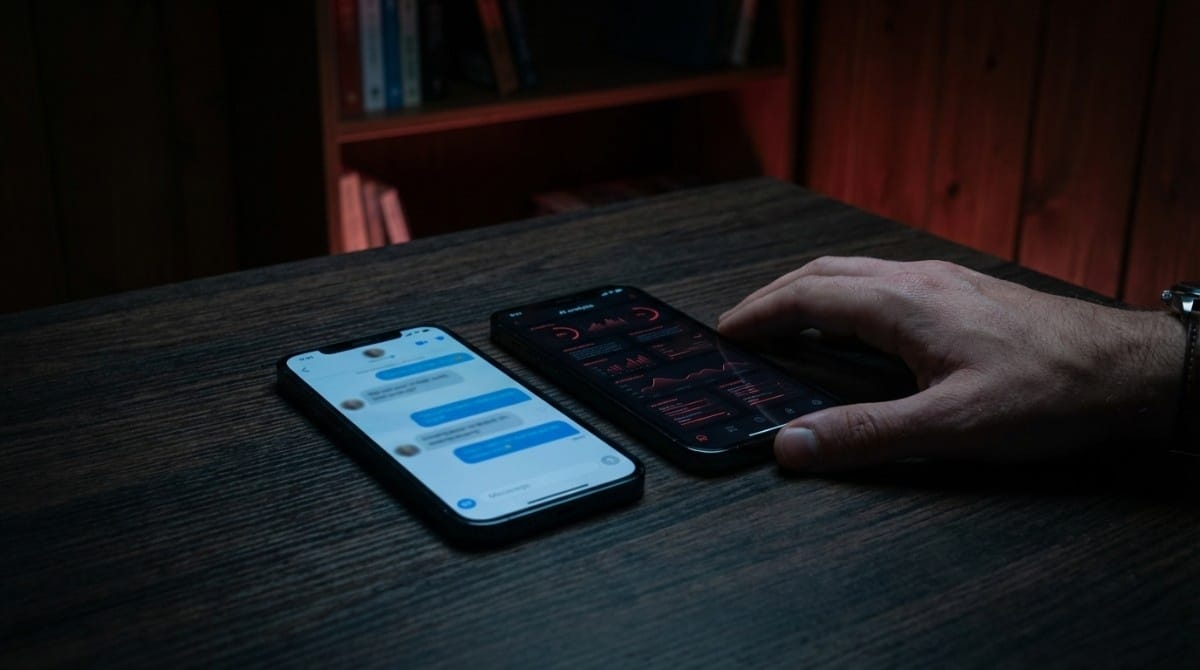
Stage 3 - The Decode Something shifted and you can't tell why. Their replies got shorter. The energy changed. You're not sure if they're losing interest or just busy. An AI wingman reads the conversation and gives you a clear read - interest score, red flags, green flags, and a recommended next move. That's what the Chat Decoder is built for.
Stage 4 - The Pre-Date Practice The date is confirmed. The anxiety is real. A human wingman might give you a pep talk. An AI wingman lets you actually practice the conversation - a simulated voice call at practice.datingx.ai that runs you through the kinds of exchanges that make or break a first date, before the stakes are real.

Statistics & Research Insight
Studies on social facilitation - first documented by Norman Triplett in 1898 and expanded significantly through the 20th century - consistently show that having access to external perspective during high-stakes decision-making improves performance outcomes. The mechanism isn't intelligence transfer. It's anxiety reduction.
Applied to dating: in digital communication research, personalized context-aware messages significantly outperform generic ones in response rate. The barrier to connection usually isn't attraction - it's communication quality under pressure.
A separate body of research on behavioral rehearsal shows that practicing a high-stakes interaction before it happens - even in a simulated environment - measurably reduces anxiety and improves real-world performance. This is the behavioral science behind why pre-date simulation works.
When NOT to Lean on an AI Wingman
Like any tool, context matters. There are situations where an AI wingman adds clarity - and situations where it adds distance:
- Don't use it to avoid developing your own instincts. If AI suggestions become a permanent substitute rather than a calibration tool, you're using it wrong.
- Don't use it mid-date. The AI wingman is pre-date and pre-message. Once you're in the room, you're on your own - and that's the point.
- Don't use it to fake a personality. If a generated opener doesn't sound like anything you'd actually say, adjust it before sending. Authenticity isn't killed by using tools - it's killed by not filtering the output through your own voice.
- Don't use it when the answer is obvious. If you know what to say and feel good about it, send it. Don't introduce artificial uncertainty into a message that's already working.
Quick Framework: Using an AI Wingman Without Losing Yourself
- Start with your voice - Use AI suggestions as a first draft, not a final script. Filter through your personality before sending.
- Prioritize decoding over scripting - The highest-value function is understanding what's already happening in a conversation, not replacing your natural responses.
- Take pre-date practice seriously - One simulated conversation before a first date is worth more than three pep talks. Use it.
- Look for patterns, not just individual messages - The best AI tools surface trends across conversations. Pay attention to what consistently works.
- Graduate from it as your confidence builds - The goal is to internalize what you learn, not remain dependent on the tool indefinitely.
Final Takeaway
The wingman concept has always been about reducing the cognitive and emotional load of high-stakes social situations. Modern dating has raised those stakes significantly - more platforms, more simultaneous conversations, more text-based performance pressure, less room for the organic social dynamics that used to fill the gap.
AI doesn't replace the human element of dating. It removes the friction that prevents it from happening in the first place. The best AI wingman is one that makes you better at dating - not one that dates for you.
That distinction is what separates tools worth using from ones that just add noise.
Stop Going In Alone
Every stage of modern dating has a friction point - the blank opener, the stalled conversation, the ambiguous signal, the pre-date anxiety spiral. Most people try to push through with willpower. Some get a second opinion from a friend. The sharpest people use a tool that's actually built for it.
DatingX is an AI co-pilot designed to function as your always-on wingman:
- 🎯 Open smarter - Personalized first messages built from their actual profile, not a generic template
- 💬 Reply with confidence - Real-time suggestions calibrated to your specific conversation momentum
- 🔍 Stop guessing - Decode what their messages actually mean and get a clear recommended next move
If the anxiety hits before the date, practice the conversation before it's real - simulated voice call, zero stakes, genuine results.
Download DatingX and 10x your dating game.
FAQ
Q1: What does a dating wingman actually do? A dating wingman helps you navigate romantic interactions with more confidence and clarity - whether crafting an opener, responding to a message, reading a signal, or preparing for a date. Traditionally a trusted friend, the role is now increasingly filled by AI tools that are on-demand and free from personal bias.
Q2: Why do people need a wingman in modern dating? Modern dating is almost entirely text-based before it becomes in-person. That creates unique pressure around communication quality, timing, and signal interpretation. Most people experience some degree of anxiety or paralysis in these moments - a wingman, human or AI, provides an external perspective that reduces that cognitive load.
Q3: Is an AI wingman better than asking a friend for dating advice? For real-time support, pattern recognition, and objective signal decoding, AI consistently outperforms a human friend. Friends are limited by their own relationship baggage, availability, and sample size. AI tools like DatingX analyze the actual conversation rather than your retelling of it.
Q4: Can an AI wingman help with dating anxiety? Yes. The two most anxiety-inducing moments in modern dating - sending the first message and preparing for a first date - are both directly addressed by AI wingman tools. DatingX's opener generator removes blank-page paralysis, and the virtual date simulator at practice.datingx.ai reduces first-date anxiety through behavioral rehearsal.
Q5: Does using an AI wingman make dating feel less authentic? Not if used correctly. AI suggestions are most effective when filtered through your own voice - they're a starting point, not a script. The goal is to reduce anxiety-driven communication failures, not replace genuine personality. Most people find they sound more like themselves when they're less anxious.