
How to Use an AI Wingman When You Keep Getting Ghosted

Getting ghosted once is an experience. Getting ghosted repeatedly is a pattern - and patterns have causes.
Most people respond to chronic ghosting by blaming luck, their photos, or the other person. The harder truth is that ghosting usually happens at a specific moment in the conversation sequence, and that moment is almost always identifiable if you know what to look for.
Chronic ghosting in dating is a communication pattern failure, not a personal rejection - and it can be diagnosed and corrected with the right signal-reading tools.
TL;DR
- Most ghosting happens at predictable moments: after the opener, mid-conversation, or after a date is proposed
- Each drop-off point has a specific cause that can be identified in the conversation itself
- An AI wingman helps you diagnose where you're losing people and why - before you repeat the same mistake
- The Chat Decoder is the most direct tool for reading what was really happening in a conversation before it went cold
- Fixing a ghosting pattern is about adjusting communication behavior, not changing who you are
What Is Ghosting, Really?
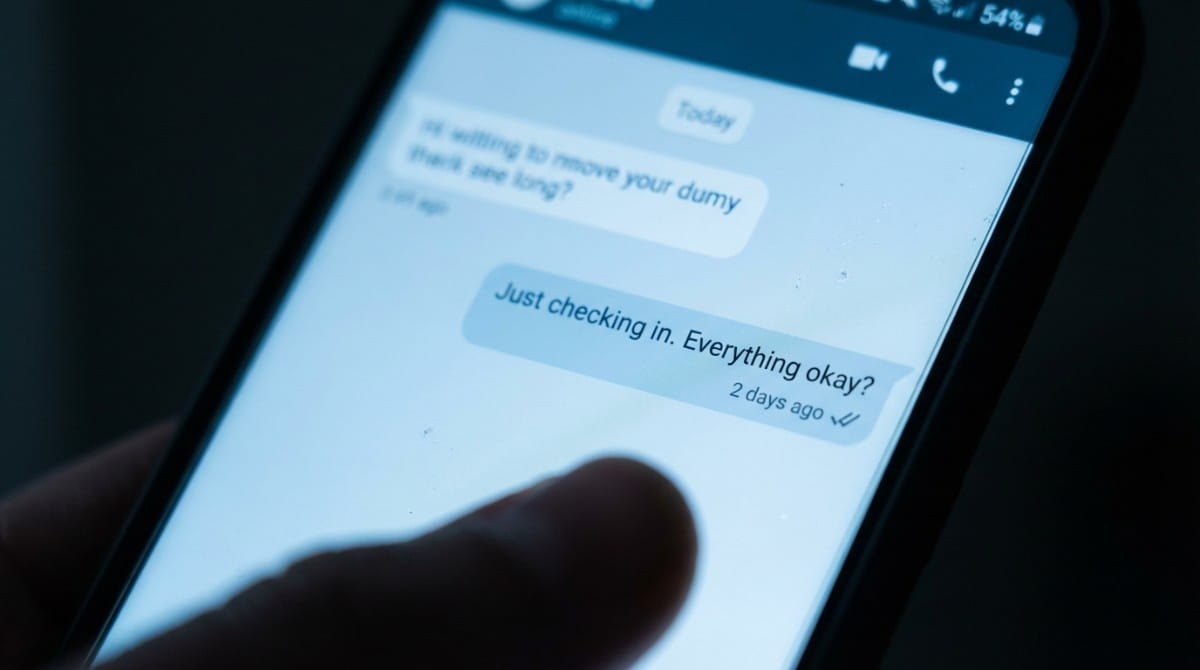
Ghosting is when someone you've been talking to stops responding without explanation. No closure, no reason given - just silence where there used to be conversation.
It's become the default exit strategy in modern dating because it's frictionless for the person leaving. For the person left behind, it creates a specific kind of cognitive dissonance: you have a conversation history right in front of you, but no way to know what went wrong.
That's the part most people get stuck on - the not knowing. And that's exactly where an AI wingman changes the equation.
Key Insight: Ghosting rarely comes from nowhere. In most cases, the signal that a conversation was declining appeared several messages before the silence started. The problem isn't that the signs weren't there - it's that most people don't know how to read them in real time.
If you've ever been ghosted after a good date and had no idea what happened, the answer is almost always visible in the post-date text exchange - and it's learnable once you see it clearly.
Why Does Ghosting Keep Happening to the Same People?
Ghosting isn't random. It clusters around specific behaviors, specific moments, and specific communication patterns. If it keeps happening to you, one of three things is usually true:
1. Your opener isn't creating enough genuine curiosity. Generic openers - "hey," "how's your week going," anything that could be sent to anyone - get ignored or given a polite one-word reply that dies within two exchanges. This is Stage 1 ghosting: they technically responded, but never actually engaged.
2. Your mid-conversation energy is miscalibrated. Too eager, too passive, or tone-deaf to where the conversation actually is. This is the most common ghosting trigger - the conversation had momentum, something shifted, and neither person named it. By the time you notice, they've already mentally moved on. The signs a text conversation is going well versus quietly fading are readable if you know what to track - most people only notice the fade in hindsight.
3. You're misreading the transition moment. The move from conversation to date proposal is the highest-risk moment in modern dating. Too early and it feels like pressure. Too late and the energy dissipates. Get the timing wrong in either direction and the silence that follows feels like ghosting - because it is.
All three of these are diagnosable. None of them require you to be a different person.

How to Use an AI Wingman to Diagnose a Ghosting Pattern
This is where the tool becomes genuinely useful - not as a message generator, but as a pattern reader.
Step 1 - Run the Decode Before You Spiral
The moment you notice a conversation going quiet, paste it into DatingX's Chat Decoder before you send a follow-up. The decoder reads the full thread - tone shifts, engagement patterns, interest signals - and gives you a compatibility score, red flags, green flags, and a recommended next move.
This matters because the worst thing you can do after a fade is send a message calibrated to a conversation that doesn't exist anymore. The decoder tells you what conversation you're actually in - not the one you thought you were having.
Step 2 - Identify Your Drop-Off Point
After decoding two or three conversations that went cold, you'll start to see a pattern. Most people who get ghosted repeatedly lose people at the same stage. Either:
- Their openers generate a reply but no follow-through engagement
- Their mid-conversation replies are consistent but the transition to asking for a date is awkward
- Their post-match energy is high but fades once the conversation has to sustain itself without novelty
Knowing your specific drop-off point tells you exactly what to fix. If conversations consistently go cold after days of silence, that's a different problem than conversations that never get past the first few exchanges - and they require different solutions.
Step 3 - Fix the Specific Stage, Not Everything at Once
Once you've identified your drop-off point, use the right tool for that specific stage:
The goal isn't to use all four tools for every conversation. It's to identify which stage is breaking down and apply the right fix there.
Step 4 - Test, Don't Overhaul
After adjusting one stage, test it across three to five conversations before drawing conclusions. Dating patterns take a sample size to diagnose properly. If you change everything at once, you won't know what actually moved the needle.
💡 If you've been wondering what to text when a conversation goes cold and nothing has worked, the issue is usually upstream - the re-engagement message isn't the problem, the conversation before it was.
This is exactly the use case DatingX's Chat Decoder was built for - paste the full thread, get a clear read on what happened, and know what (if anything) to send next.
What Ghosting After a Good Date Usually Means
Post-date ghosting is its own category and deserves separate treatment, because it's the most disorienting version.
You had a good time. They seemed engaged. Maybe they even said "we should do this again." And then - nothing.
A few things are usually happening:
The date felt better to you than to them. Attraction is asymmetric and hard to read in person. What felt like mutual chemistry may have been one-sided enthusiasm. The decoder can't retroactively analyze the date, but it can analyze the text exchange after - and post-date text energy is usually very revealing.
The transition text went wrong. The message you send within 24 hours of a first date is one of the highest-leverage moments in the whole sequence. Too eager and it confirms insecurity. Too casual and it signals disinterest What to text after she says yes to a date is one reference point - the post-date equivalent has the same stakes.
They were on the fence and the silence made the decision for them. Some post-date ghosting isn't a reaction to something you did - it's a reflection of where they were before the date. This one is genuinely outside your control, and recognizing it is important so you don't over-correct.
When NOT to Use an AI Wingman for Ghosting Situations
- Don't use it to craft a guilt-trip message. If someone has gone silent for several days, an AI-generated "I noticed you've been quiet" message won't fix it and may accelerate the exit.
- Don't decode a conversation looking for what you want to see. If the decoder shows low interest and red flags, that's information - not a challenge to overcome with a better reply.
- Don't use it to chase someone who has clearly moved on. The AI wingman is a tool for improving communication quality, not for reversing someone's decision about their own interest.
- Don't ignore the pattern to focus on the individual. If you've been ghosted by multiple people in a row, the temptation is to obsess over each individual case. The more useful question is what they all have in common.
Statistics & Research Insight
Research on digital communication and relationship initiation consistently shows that perceived responsiveness - how much someone feels understood and valued in an exchange - is the single strongest predictor of continued engagement in early-stage dating conversations.
Ghosting most often occurs when perceived responsiveness drops below a threshold that makes continued engagement feel worth the effort. This drop is rarely sudden - it's a gradual erosion that happens across multiple messages and is readable in the pattern of reply length, timing, and specificity.
Behavioral research on rejection sensitivity also shows that people who get ghosted repeatedly tend to either over-pursue (increasing message frequency) or under-pursue (going cold themselves) in response - both of which accelerate the outcome they're trying to avoid. The intervention that actually works is accurate signal-reading followed by calibrated response, not volume adjustment.
Quick Framework: Using an AI Wingman to Break a Ghosting Pattern
- Decode before you follow up - Never send a re-engagement message without reading the conversation first. Know what you're walking back into.
- Find your drop-off stage - Opener? Mid-convo? Date transition? Post-date text? Locate the specific moment you keep losing people.
- Apply the right tool to that specific stage - Don't fix everything. Fix the one thing that's breaking.
- Run three to five tests before drawing conclusions - Pattern recognition requires a sample size. One conversation is anecdote. Five is data.
- Separate fixable patterns from unfixable individual decisions - Some ghosting is about them, not you. The decoder helps you tell the difference.
Final Takeaway
Getting ghosted is frustrating. Getting ghosted repeatedly without understanding why is the kind of frustration that compounds - it starts to feel like a verdict on your worth rather than a solvable communication problem.
It's the latter. Almost always.
The conversations you've had with people who disappeared are still sitting in your phone. They contain information. An AI wingman - specifically a decoder - can read that information and turn it into something actionable.
You don't need to change who you are. You need to understand where the sequence is breaking - and fix that one thing.
The Pattern Is in the Conversation. The Decoder Finds It.
If you keep getting ghosted and can't figure out why, the answer is almost certainly visible in the exchanges themselves - in the tone shifts, the reply patterns, the moment the energy changed. Most people can't see it because they're too close to it.
DatingX's Chat Decoder reads the conversation you paste and gives you:
- 🔍 A compatibility score based on actual conversation patterns - not gut feeling
- 🚩 Green flags and red flags identified from the specific exchange
- 📍 A recommended next move grounded in what the conversation actually shows
That's the decoder. But if the problem starts earlier - at the opener or mid-conversation reply stage - the Replier and Opener Generator cover those stages too.
And if the date is confirmed but the anxiety is real, practice the conversation before it happens - simulated voice call, zero stakes.
Download DatingX and 10x your dating game.
FAQ
Q1: Why do I keep getting ghosted even when conversations seem to be going well?
Most repeated ghosting happens at a specific, consistent drop-off point in the conversation sequence - after the opener, mid-thread, or at the date-proposal moment. The conversation feeling good from your side doesn't mean the signals were mutual. A chat decoder tool can analyze the actual exchange and identify where engagement dropped and why.
Q2: Is there an AI tool that can tell me why I got ghosted?
DatingX's Chat Decoder analyzes conversation screenshots and identifies tone shifts, interest signals, red flags, and the point where engagement declined. It can't tell you what the other person was thinking, but it can tell you what the conversation pattern shows - which is usually enough to identify the communication behavior that preceded the silence.
Q3: What should I do when someone stops responding mid-conversation?
Before sending a follow-up, decode the conversation first. Understanding whether the fade was gradual or sudden, and what the last few messages signaled, tells you whether re-engagement is worth attempting and what tone to use if it is. Sending a re-engagement message without reading the context often accelerates the exit.
Q4: How do I know if I'm being ghosted or if they're just busy?
The distinction is usually visible in the pattern rather than any single message. Busy people often send shorter replies but maintain some engagement thread. Fading interest shows up as decreasing reply specificity, increasing response time, and shorter average message length across several exchanges. A chat decoder reads these patterns objectively.
Q5: Can an AI wingman help me stop getting ghosted?
Yes, if used to diagnose and correct the specific stage where you're losing people. The AI wingman isn't a charm generator - it's a communication calibration tool. The goal is to identify your consistent drop-off point, fix the behavior at that stage, and test across enough conversations to confirm the pattern has shifted.